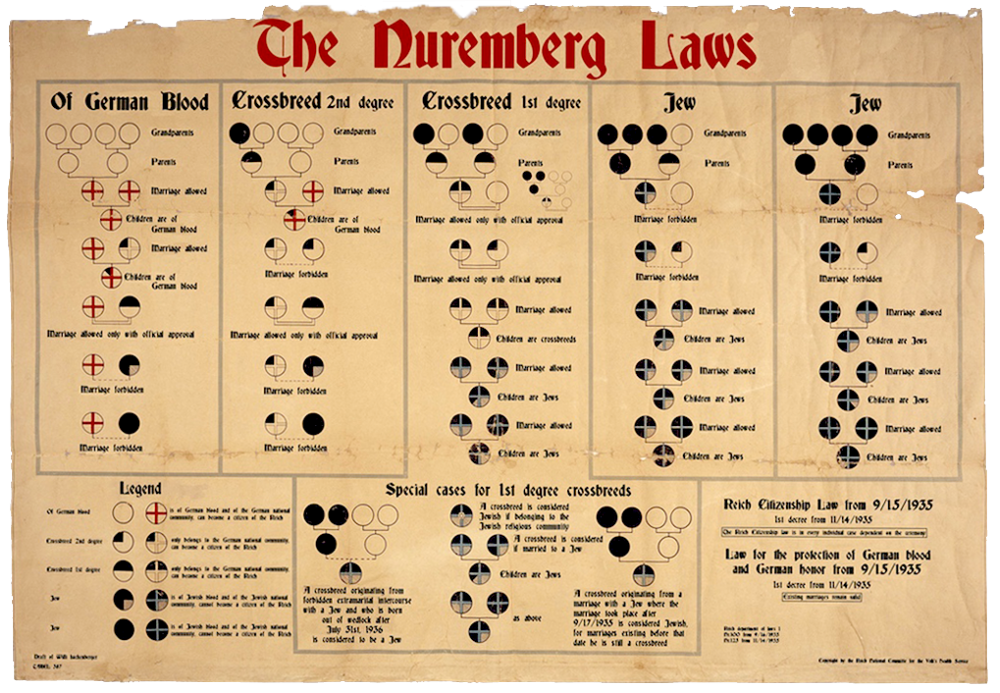
The Laws and Their Provisions
The Nuremberg Race Laws were passed in 1935 by the Nazi regime in Germany. The laws were designed to establish a clear racial hierarchy within the country, with Aryans at the top and Jews at the bottom. The laws defined who was considered an Aryan and who was considered a Jew, and forbade marriage and sexual relations between the two groups.
The Nuremberg Race Laws also prohibited Jews from holding public office, attending public schools, or working in certain professions. They also required Jews to register their property and wear a yellow Star of David on their clothing.
The Nuremberg Race Laws were a major step in the Nazi regime's campaign against the Jews. The laws created a legal framework for the persecution of Jews and laid the groundwork for the Holocaust.
International Reactions
The Nuremberg Laws were met with widespread condemnation from the international community. The United States, Great Britain, and France all issued statements condemning the laws, and the League of Nations passed a resolution declaring the laws to be a violation of international law.
The international community's reaction to the Nuremberg Laws was largely due to the fact that the laws were seen as a clear violation of the rights of Jews. The laws stripped Jews of their German citizenship and denied them basic civil rights, such as the right to vote, the right to hold public office, and the right to own property.
The international community's condemnation of the Nuremberg Laws helped to put pressure on the German government to repeal the laws. In 1945, the laws were finally repealed by the Allied powers.
Legacy of the Nuremberg Race Laws
The Nuremberg Race Laws had a profound impact on German society and the lives of Jews living in Germany. The laws created a system of racial segregation and discrimination that made it increasingly difficult for Jews to live in Germany. The laws also paved the way for the Holocaust, which resulted in the murder of six million Jews.
The Nuremberg Race Laws were a series of laws passed by the Nazi government in Germany in 1935. The laws defined who was considered to be a Jew and restricted the rights of Jews in many areas of life. The laws included the following provisions:
- Jews were not allowed to marry or have sexual relations with non-Jews.
- Jews were not allowed to hold public office.
- Jews were not allowed to practise law or medicine.
- Jews were not allowed to attend public schools or universities.
- Jews were not allowed to own businesses or property.
The Nuremberg Race Laws were a major turning point in the history of the Holocaust. The laws created a legal framework for the persecution of Jews and paved the way for the eventual extermination of the Jewish population of Europe.
The Nuremberg Race Laws had a lasting legacy in Germany. The laws were not repealed until 1949, and the effects of the laws can still be seen in German society today. The Nuremberg Race Laws are a reminder of the dangers of racism and discrimination, and of the importance of fighting for the rights of all people.
Frequently Asked Questions
What did the Nuremberg Race Laws accomplish?The Nuremberg Race Laws, passed on September 15, 1935, were a series of laws passed by Nazi Germany that stripped Jews of their German citizenship and banned them from marrying Aryans. The laws also prohibited Jews from holding public office, working in the civil service, and serving in the military. The Nuremberg Race Laws were a major step in the process of Nazi persecution of Jews, and they paved the way for the Holocaust.
What were the key provisions of the Nuremberg Race Laws?The Nuremberg Race Laws consisted of two main parts: the Law for the Protection of German Blood and German Honor and the Reich Citizenship Law. The Law for the Protection of German Blood and German Honor prohibited marriages between Jews and Aryans, and it also banned sexual relations between Jews and Aryans. The Reich Citizenship Law stripped Jews of their German citizenship and made them stateless.
How did the Nuremberg Race Laws impact German Jews?The Nuremberg Race Laws had a devastating impact on German Jews. The laws effectively segregated Jews from the rest of German society, and they made it impossible for Jews to live normal lives. The laws also led to widespread discrimination against Jews, and they created a climate of fear and intimidation.
What was the international response to the Nuremberg Race Laws?The Nuremberg Race Laws were widely condemned by the international community. Many countries protested the laws, and some countries even took economic sanctions against Germany. However, the international community was unable to stop the Nazi regime from implementing the laws.
What is the legacy of the Nuremberg Race Laws?The Nuremberg Race Laws are a reminder of the dangers of racism and discrimination. The laws were a major step in the process of Nazi persecution of Jews, and they paved the way for the Holocaust. The Nuremberg Race Laws also serve as a warning about the importance of protecting human rights and civil liberties.