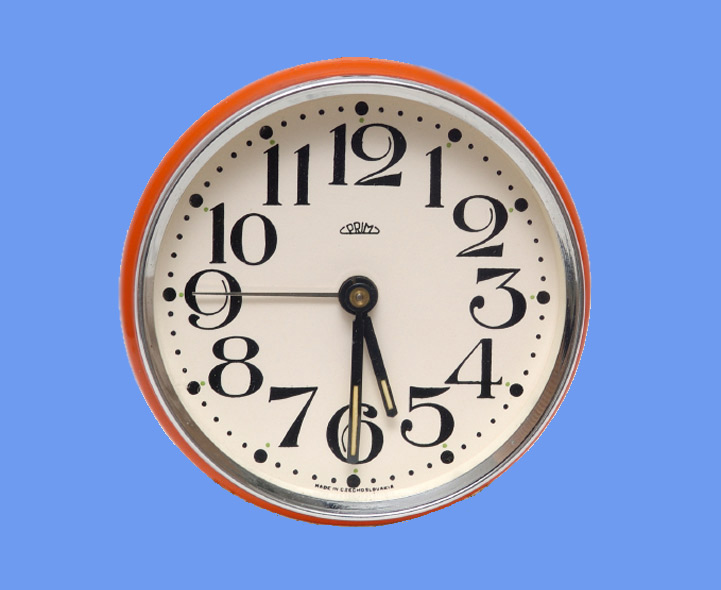
Time is a precious and elusive asset. Its constant flow reminds us of the transient nature of our existence. Every minute and second that passes brings us closer to the inevitable end, yet it also presents us with fresh opportunities and possibilities. The question of "What time will it be in 41 minutes?" may seem trivial on the surface, but it delves into the profound nature of time itself. It is a question that prompts us to consider our immediate future and how we choose to allocate the precious moments that remain.
In a world saturated with distractions and constant stimulation, it's easy to lose track of the time. Our minds race from one task to the next, often leaving us disoriented and wondering where the hours have gone. Taking a moment to pause and ask ourselves, "What time will it be in 41 minutes?" forces us to slow down, become present, and appreciate the fleeting time we have. It's a simple yet effective practice that can help us become more intentional with our time and make the most of every moment.
What Time Will It Be In 41 Minutes
It can be difficult to keep track of time, especially when you're busy. If you need to know what time it will be in 41 minutes, there are a few different ways to figure it out.
The most straightforward way is to simply add 41 minutes to the current time. For example, if it is currently 3:00 PM, then in 41 minutes it will be 3:41 PM.
You can also use a time converter website or app. These tools allow you to enter the current time and the number of minutes you want to add, and they will calculate the future time for you.
If you don't have access to the internet, you can also use a calculator to figure out the future time. Simply add 41 to the current time, and then divide the result by 60 to get the number of hours. The remainder will be the number of minutes.
For example, if it is currently 3:00 PM, then in 41 minutes it will be 3:41 PM. To calculate this using a calculator, you would add 41 to 300, which gives you 341. Then, you would divide 341 by 60, which gives you 5 hours and 41 minutes.
Using a Time Calculator
A time calculator is a tool that can be used to calculate the time difference between two different time zones, or to calculate the time in a specific time zone at a specific time. This can be useful for a variety of purposes, such as planning travel, coordinating meetings, or simply keeping track of time when working with people in different time zones.
How to Use a Time Calculator
- Enter the current time in the "Start Time" field.
- Select the time zone for the start time.
- Enter the number of minutes you want to add or subtract in the "Minutes to Add/Subtract" field.
- Select whether you want to add or subtract the minutes.
- Click the "Calculate" button.
The results of the calculation will be displayed in the "Result" field.
Tips for Using a Time Calculator
- Be sure to select the correct time zone for the start time.
- Double-check the number of minutes you want to add or subtract.
- Make sure to select the correct operation (add or subtract).
Adding Minutes to a Specific Time
Knowing how to calculate the time after a certain number of minutes have passed is a helpful skill to have. Whether you're planning a meeting, catching a train, or simply trying to figure out when you need to leave for an appointment, being able to add minutes to a specific time can save you a lot of time and hassle.
Luckily, adding minutes to a specific time is a relatively simple process. Here are the steps involved:
- Write down the starting time. This is the time that you're starting with, before you add any minutes.
- Convert the starting time to military time. This involves converting the time from the 12-hour clock to the 24-hour clock. For example, 3:00 PM would become 15:00.
- Add the number of minutes to the starting time. For example, if you want to add 41 minutes to 3:00 PM, you would add 41 to 15:00, which gives you 15:41.
- Convert the time back to the 12-hour clock. This involves converting the time from the 24-hour clock to the 12-hour clock. For example, 15:41 would become 3:41 PM.
Here is an example of how to add minutes to a specific time using the steps above:
Starting time: 3:00 PM
Military time: 15:00
Number of minutes to add: 41
Time after adding minutes: 15:41
12-hour clock time: 3:41 PM
As you can see, adding minutes to a specific time is a quick and easy process. With a little practice, you'll be able to do it in your head without any problems.
Determining the Time in a Different Time Zone
Traveling to a different time zone can be confusing, especially when trying to figure out what time it will be when you arrive. To calculate the time in a different time zone, you need to know the time difference between your current location and the destination. You can use an online time zone converter or do the calculation yourself.
Calculating the Time Difference
To calculate the time difference, find the difference in hours between the two time zones. For example, if you are traveling from New York City, which is in the Eastern Time Zone (ET), to Los Angeles, which is in the Pacific Time Zone (PT), the time difference is -3 hours. This means that when it is 10:00 AM in New York City, it is 7:00 AM in Los Angeles.
Adjusting for Daylight Saving Time
Daylight saving time (DST) can further complicate calculations. DST is a practice of advancing clocks during the summer months to make better use of daylight. Most countries in the world do not observe DST, but some do, including the United States and Canada.
When calculating the time difference between two locations, it is important to consider whether or not both locations are observing DST. If they are, you will need to adjust the time difference accordingly. For example, if it is 10:00 AM in New York City during DST, it will be 8:00 AM in Los Angeles during DST.
Using an Online Time Zone Converter
If you don't want to do the calculations yourself, you can use an online time zone converter. There are many different time zone converters available, so you can choose one that is easy to use and provides the information you need.
To use a time zone converter, simply enter the time and date in your current location and the time zone you want to convert to. The converter will then calculate the time in the new time zone.
Conclusion
Calculating the time in a different time zone is not difficult, but it is important to consider the time difference and whether or not both locations are observing DST. You can use an online time zone converter for quick and easy calculations.
Accounting for Daylight Saving Time
Many countries around the world observe Daylight Saving Time (DST), a practice of advancing clocks during the summer months to make better use of daylight. This can make it challenging to calculate the time in a different location when DST is in effect.
How Daylight Saving Time Works
In most countries that observe DST, clocks are advanced by one hour in the spring and moved back by one hour in the fall. This means that there are two periods each year when the time changes by one hour.
Calculating the Time in a Different Location
When calculating the time in a different location that observes DST, it is important to consider the following factors:
- The current time in the location you are in
- The current time in the location you want to know the time for
- Whether DST is currently in effect in both locations
If DST is not in effect in either location, the time difference is simply the difference in the standard times of the two locations.
If DST is in effect in both locations, the time difference is the difference in the standard times of the two locations, plus or minus one hour, depending on which location is observing DST.
If DST is in effect in one location but not the other, the time difference is the difference in the standard times of the two locations, plus or minus one hour, depending on which location is observing DST.
Example
For example, if it is currently 10:00 AM in New York City and you want to know the time in London, you would need to do the following:
- Check if DST is in effect in both locations. In this case, it is.
- Find the difference in the standard times of the two locations. In this case, the standard time in New York City is Eastern Time (ET), which is 5 hours behind Coordinated Universal Time (UTC), and the standard time in London is Greenwich Mean Time (GMT), which is 0 hours behind UTC.
- Add or subtract one hour, depending on which location is observing DST. In this case, New York City is observing DST and London is not, so we would subtract one hour.
- The result is that it is currently 3:00 PM in London.
Conclusion
By following these steps, you can easily calculate the time in a different location that observes DST. This can be helpful for planning travel, scheduling meetings, or simply staying connected with friends and family who live in different time zones.
Calculating the Time in the Future
Knowing the time in the future can be useful for planning and scheduling. Whether you're trying to figure out when a meeting will end or what time you need to leave for an appointment, there are a few simple ways to calculate the time in the future.
Adding Minutes
The most straightforward way to calculate the time in the future is to simply add the number of minutes to the current time. For example, if it's currently 3:00 PM and you want to know what time it will be in 41 minutes, you would add 41 to 3:00. This gives you a time of 3:41 PM.
Using a Time Calculator
If you don't want to do the math yourself, you can use a time calculator. There are many different time calculators available online, and they can be a quick and easy way to get the information you need.
Converting to a 24-Hour Clock
If you're using a 24-hour clock, you may need to convert the time to a 12-hour clock before you can add the minutes. To do this, simply subtract 12 from the 24-hour time. For example, if it's currently 15:00 (3:00 PM), you would subtract 12 to get 3:00 PM.
Example
Let's say it's currently 9:30 AM and you want to know what time it will be in 41 minutes. Here's how you would calculate it:
- Add 41 minutes to 9:30 AM.
- 9:30 AM + 41 minutes = 10:11 AM.
Therefore, it will be 10:11 AM in 41 minutes.
Conclusion
In conclusion, being aware of the time difference between different time zones is crucial for effective communication and coordination. By utilizing the resources and methods mentioned above, you can easily determine what time it will be in a specific location at a given time.
Remember that time zones are essential for maintaining a coherent and organized global system. Understanding time differences allows us to plan our schedules, coordinate appointments, and connect with people worldwide seamlessly. So, the next time you need to know what time it will be in a different time zone, don't hesitate to use the available tools and resources to ensure accurate information.
Frequently Asked Questions
What time will it be in 41 minutes?
To determine the time in 41 minutes, add 41 minutes to the current time. For instance, if the current time is 3:00 PM, adding 41 minutes would result in 3:41 PM.
How can I calculate the time in 41 minutes from now?
To calculate the time in 41 minutes from now, follow these steps: 1. Convert the current time to a 24-hour format (e.g., 3:00 PM becomes 15:00). 2. Add 41 minutes to the 24-hour time (e.g., 15:00 + 41 minutes = 15:41). 3. Convert the result back to the 12-hour format if needed (e.g., 15:41 becomes 3:41 PM).
What is the easiest way to find the time in 41 minutes?
The easiest way to find the time in 41 minutes is to use a clock or a time conversion tool. Simply set the current time and add 41 minutes to get the desired time.
How do I know if I'm adding or subtracting 41 minutes?
When calculating the time in 41 minutes from now, you always add 41 minutes. However, if you need to calculate the time 41 minutes ago, you would subtract 41 minutes from the current time.
Is there a formula to calculate the time in 41 minutes?
Yes, you can use the following formula to calculate the time in 41 minutes from now: Time in 41 minutes = Current time + 41 minutes For example, if the current time is 10:30 AM, the time in 41 minutes would be 10:30 AM + 41 minutes = 11:11 AM.