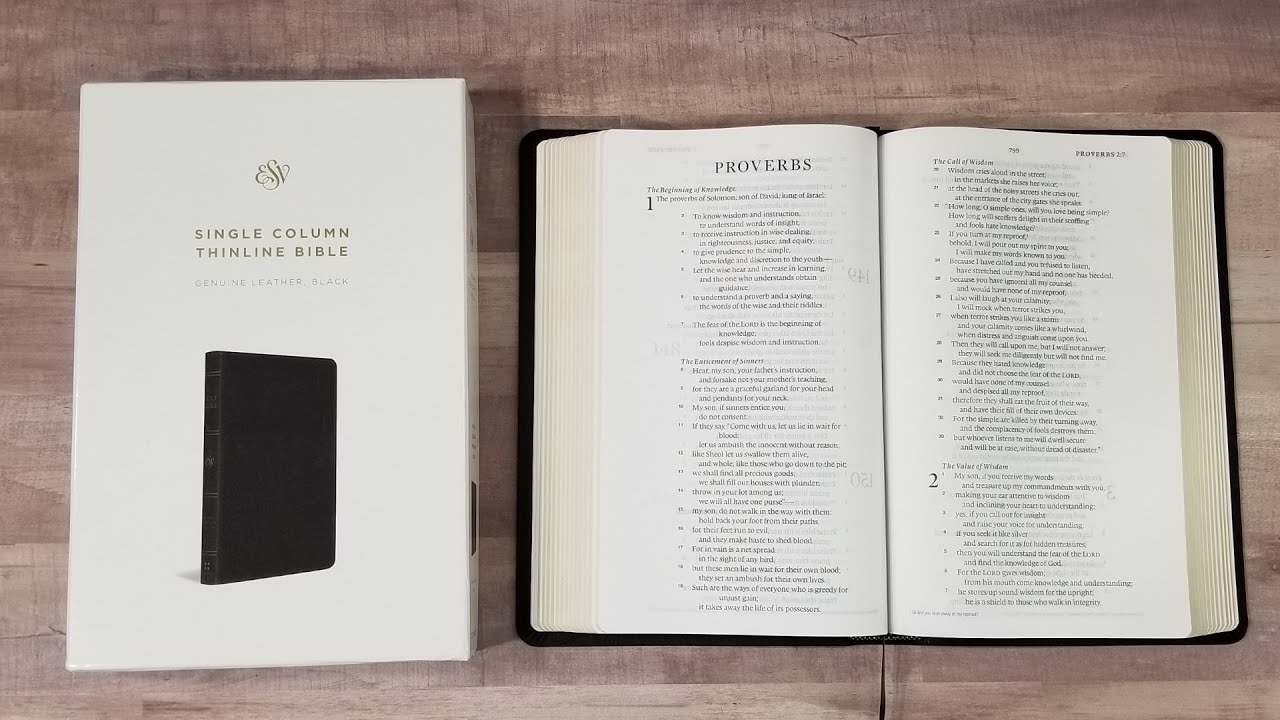
Thin Bibles are Bibles that are slimmer and more compact than traditional Bibles. They are typically made with thinner paper and a smaller font size, which makes them easier to carry and read. Thin Bibles are a popular choice for people who want a Bible that is portable and easy to read on the go.
The term "thinline Bible" is not well-defined, but generally refers to Bibles that are less than one inch thick. Some thinline Bibles may be as thin as half an inch. Thinline Bibles can be found in a variety of translations and styles, so you can find one that meets your specific needs.
Meaning of Thinline Bible
A thinline Bible is a Bible that is designed to be thin and portable. It is typically made with thin paper and a flexible binding, which makes it easy to carry around in a pocket or purse. Thinline Bibles are often used by people who want to have a Bible with them at all times, or by people who want a Bible that is easy to read and carry.
Benefits of a Thinline Bible
- Thin and portable
- Easy to carry around
- Flexible binding
- Easy to read
Considerations When Choosing a Thinline Bible
There are a few things to consider when choosing a thinline Bible. First, consider the size of the Bible. Thinline Bibles come in a variety of sizes, so it is important to choose one that is comfortable for you to hold and read. Second, consider the binding of the Bible. Some thinline Bibles have a softcover binding, while others have a hardcover binding. Softcover bindings are more flexible and easier to carry, while hardcover bindings are more durable.
Finally, consider the paper quality of the Bible. Thinline Bibles are typically made with thin paper, but the quality of the paper can vary. Some Bibles have high-quality paper that is easy to read, while others have lower-quality paper that can be difficult to read. It is important to choose a Bible with high-quality paper that is easy on the eyes.
Conclusion
Thinline Bibles are a great option for people who want a Bible that is thin, portable, and easy to read. They are available in a variety of sizes and bindings, so you can choose one that is right for you. When choosing a thinline Bible, consider the size, binding, and paper quality to ensure that you choose a Bible that you will enjoy reading.
Size and Portability
Thinline Bibles are designed to be as thin and portable as possible, making them ideal for carrying around on a daily basis. They are typically around 0.5 inches thick, which is about half the thickness of a standard hardcover Bible. This makes them much easier to fit into a purse, backpack, or briefcase. Thinline Bibles are also lightweight, usually weighing less than 1 pound. This makes them comfortable to carry around for long periods of time.
The compact size of Thinline Bibles also makes them easier to read. The thinner profile makes it easier to hold the Bible in one hand and turn the pages. The lightweight design also reduces the strain on your wrist and arm.
Here are some of the benefits of Thinline Bibles:
- They are thin and portable, making them easy to carry around on a daily basis.
- They are lightweight, making them comfortable to carry around for long periods of time.
- The compact size makes them easier to hold and read.
If you are looking for a Bible that is easy to carry around and read, a Thinline Bible is a great option.
Page Thickness
The term "thinline" in the context of Bibles refers to the thickness of the Bible's pages. Thinlines Bibles are Bibles that have been printed on thin paper, making them more portable and easier to carry around.
Advantages of Thinline Bibles
- Portability: Thinlines Bibles are much thinner and lighter than traditional Bibles, making them easier to carry around in a backpack, purse, or briefcase.
- Convenience: The thin profile of Thinlines Bibles makes them more convenient to handle and read, especially when sitting or standing for long periods of time.
- Durability: Despite their thin pages, Thinlines Bibles are often made with durable materials that can withstand daily use.
- Variety: Thinlines Bibles are available in a wide range of versions, including popular translations such as the New International Version (NIV), King James Version (KJV), and English Standard Version (ESV).
Disadvantages of Thinline Bibles
- Page bleed-through: With thinner pages, there is a higher risk of the ink from one page bleeding through to the next page, which can make it difficult to read.
- Reduced note-taking space: The thin pages of Thinlines Bibles may not provide enough space for extensive note-taking or journaling.
- Higher cost: In general, Thinlines Bibles tend to be more expensive than traditional Bibles due to the specialized printing process involved.
Ultimately, the decision of whether or not a Thinlines Bible is right for you depends on your individual preferences and needs. Consider your daily routine, reading habits, and budget when making your choice.
Binding and Flexibility
Bibles come in a variety of bindings and flexibility options. The binding is the way the pages of the Bible are held together, while the flexibility refers to how easily the Bible can be bent or folded. The type of binding and flexibility you choose will depend on your personal preferences and how you plan to use the Bible.
Bindings
The most common types of bindings for Bibles are:
- Perfect binding: This is the most common type of binding for paperback books. The pages are glued together at the spine, and the cover is then glued to the spine.
- Smyth-sewn binding: This is a more durable type of binding that is often used for hardcover books. The pages are sewn together at the spine, and then the cover is glued to the spine.
- Coptic binding: This is a type of binding that is often used for Bibles and other religious texts. The pages are sewn together at the spine using a series of loops, and then the cover is glued to the spine.
Flexibility
The flexibility of a Bible refers to how easily it can be bent or folded. Bibles with a greater degree of flexibility are easier to carry and hold, while Bibles with a lesser degree of flexibility are more durable. The flexibility of a Bible will depend on the type of binding and the materials used.
Factors to Consider When Choosing a Binding and Flexibility Option
When choosing a binding and flexibility option for a Bible, there are several factors to consider:
- Personal preferences: Some people prefer Bibles with a greater degree of flexibility, while others prefer Bibles with a lesser degree of flexibility. Consider your personal preferences when making a decision.
- Intended use: If you plan to carry your Bible with you frequently, you may want to choose a Bible with a greater degree of flexibility. If you plan to use your Bible primarily at home, you may want to choose a Bible with a lesser degree of flexibility.
- Durability: Bibles with a greater degree of flexibility are more likely to be damaged if they are not handled with care. Bibles with a lesser degree of flexibility are more durable and can withstand more wear and tear.
- Cost: Bibles with a greater degree of flexibility are typically more expensive than Bibles with a lesser degree of flexibility.
Durability
When Bibles are advertised as thinlines they are most commonly referring to the high-quality paper that is used for the interior pages of the Bible. Thinlines are often printed on India paper, onion skin or just a very high-quality thin paper that is durable but also thin. This can increase the comfort and portability of the Bible without sacrificing durability.
Although thinline Bibles do use thin paper for the interior pages, the covers of thinline Bibles can have varying levels of durability. For example, a thinline Bible with a leather binding will be much more durable than a thinline Bible with a paper cover.
Reading Comfort: What Does Thinline Bible Mean?
A thinline Bible is a Bible that is designed to be thin and easy to carry. This makes it ideal for people who want to be able to read the Bible on the go, or who want a Bible that is easy to hold and read for long periods of time.
Thinline Bibles are typically made with a thin, flexible paper that is lightweight and easy to turn. They also often have a smaller font size than traditional Bibles, which can make them easier to read for some people.
Benefits of a Thinline Bible:
- Easy to carry: Thinline Bibles are thin and lightweight, so they are easy to carry with you wherever you go.
- Comfortable to read: Thinline Bibles are often made with a soft, flexible paper that is comfortable to hold and read for long periods of time.
- Easy to hold: Thinline Bibles are often smaller than traditional Bibles, which makes them easier to hold and read.
- Affordable: Thinline Bibles are typically more affordable than traditional Bibles, which makes them a good option for people on a budget.
If you are looking for a Bible that is easy to carry and read, a thinline Bible may be a good option for you. Thinline Bibles are available in a variety of translations and styles, so you can find one that meets your needs.
Types of Thinline Bibles:
- Reference Bibles: Reference Bibles include extra features such as maps, charts, and cross-references.
- Study Bibles: Study Bibles include notes and commentary that can help you understand the Bible better.
- Devotional Bibles: Devotional Bibles include daily readings and devotions that can help you grow in your faith.
Choosing a Thinline Bible:
When choosing a thinline Bible, there are a few things to keep in mind:
- Translation: Choose a translation that is easy for you to understand.
- Size: Choose a Bible that is a size that is easy for you to carry and read.
- Features: Consider what features are important to you, such as references, study notes, or devotional readings.
With so many different thinline Bibles available, you are sure to find one that meets your needs and helps you grow in your faith.
What is a Thinline Bible?
A thinline Bible is simply a Bible that is thinner than a regular Bible. This can be achieved by using thinner paper, a smaller font size, or a combination of both. Thinline Bibles are often more portable and easier to carry around than regular Bibles, making them a good option for people who want to take their Bible with them wherever they go.
There are many different thinline Bibles available, so you can choose one that fits your specific needs. Some thinline Bibles are available in a variety of translations, so you can find one that is in the language you prefer. You can also find thinline Bibles with different features, such as large print, study notes, or concordances.
If you are looking for a Bible that is easy to carry and read, a thinline Bible is a great option. Here are some of the benefits of using a thinline Bible:
- Portability: Thinline Bibles are much easier to carry around than regular Bibles, making them ideal for people who want to take their Bible with them wherever they go.
- Readability: Thinline Bibles often have a larger font size than regular Bibles, making them easier to read.
- Affordability: Thinline Bibles are often more affordable than regular Bibles, making them a good option for people on a budget.
If you are looking for a Bible that is easy to carry, read, and afford, a thinline Bible is a great option.
Purpose and Usage
Thinline Bibles are Bibles printed on thin paper to make the Bible more portable and easier to carry around.
Advantages of Thinline Bibles
Thinline Bibles have several advantages over traditional thicker Bibles:
- Portability: Thinline Bibles are much thinner and lighter than traditional Bibles, making them much easier to carry around in a purse, backpack, or briefcase.
- Durability: Thinline Bibles are often printed on durable, tear-resistant paper, making them more resistant to damage than traditional Bibles.
- Convenience: Thinline Bibles are much easier to hold and read than thicker Bibles, making them more convenient for use in a variety of settings.
Disadvantages of Thinline Bibles
There are also some disadvantages to Thinline Bibles:
- Cost: Thinline Bibles are often more expensive than traditional Bibles, due to the specialized printing process required to produce them.
- Durability: Thinline Bibles can be more easily damaged than traditional Bibles, especially if they are not handled with care.
- Page thickness: Thinline Bibles have thinner pages than traditional Bibles, which can make them more difficult to read in low-light conditions.
Who Should Use a Thinline Bible?
Thinline Bibles are a good option for people who are looking for a portable, durable, and convenient Bible. They are especially well-suited for people who travel frequently or who need to carry their Bible with them on a daily basis.
Limitations
While thinline Bibles offer many benefits, there are also some limitations to consider:
- Limited space: Because thinline Bibles are thinner, they have less space for text and other features. This can make them more difficult to read, especially for people with poor eyesight.
- Fewer features: In order to keep thinline Bibles thin, manufacturers often have to sacrifice some features. This can include things like maps, charts, and study notes. Some thinline Bibles may not even include an index.
- Durability: Thinline Bibles are not as durable as regular Bibles. The thinner paper is more likely to tear or wrinkle, and the binding may not be as strong. This can make thinline Bibles less suitable for heavy use.
- Cost: Thinline Bibles are often more expensive than regular Bibles. This is because they require specialized materials and manufacturing processes.
Overall, thinline Bibles offer a number of benefits, but there are also some limitations to consider. If you are considering purchasing a thinline Bible, it is important to weigh the advantages and disadvantages to determine if it is right for you.
Frequently Asked Questions
What does Thinline Bible mean?A Thinline Bible is a compact and portable Bible that is designed to be thin and lightweight for easy carrying. It is typically smaller than a standard-sized Bible, making it ideal for people who want to carry their Bible with them on a daily basis.
What are the benefits of using a Thinline Bible?
There are several benefits to using a Thinline Bible. Its compact size makes it easy to carry around in a purse, backpack, or even a pocket. It is also lightweight, making it comfortable to hold for extended periods of time. Additionally, Thinline Bibles are often more affordable than standard-sized Bibles, making them a great option for those on a budget.
What are the different types of Thinline Bibles available?
There are a variety of Thinline Bibles available, each with its own unique features. Some Thinline Bibles are made with genuine leather covers, while others have covers made from synthetic materials. Some Thinline Bibles include additional features, such as built-in note-taking space or concordances, while others are more basic.
How do I choose the right Thinline Bible for me?
When choosing a Thinline Bible, there are several factors to consider. First, think about what size and weight you are comfortable with. Consider the features that are important to you, such as note-taking space or a concordance. Finally, set a budget and look for a Thinline Bible that fits within your price range.
Where can I buy a Thinline Bible?
Thinline Bibles can be purchased at a variety of places, including online retailers, bookstores, and Christian bookstores. When purchasing a Thinline Bible, it is important to compare prices and read customer reviews to ensure that you are getting the best possible value.